
Sabahattin Ali & Pertev Naili Boratav: A Friendship in the Shade of Oppression
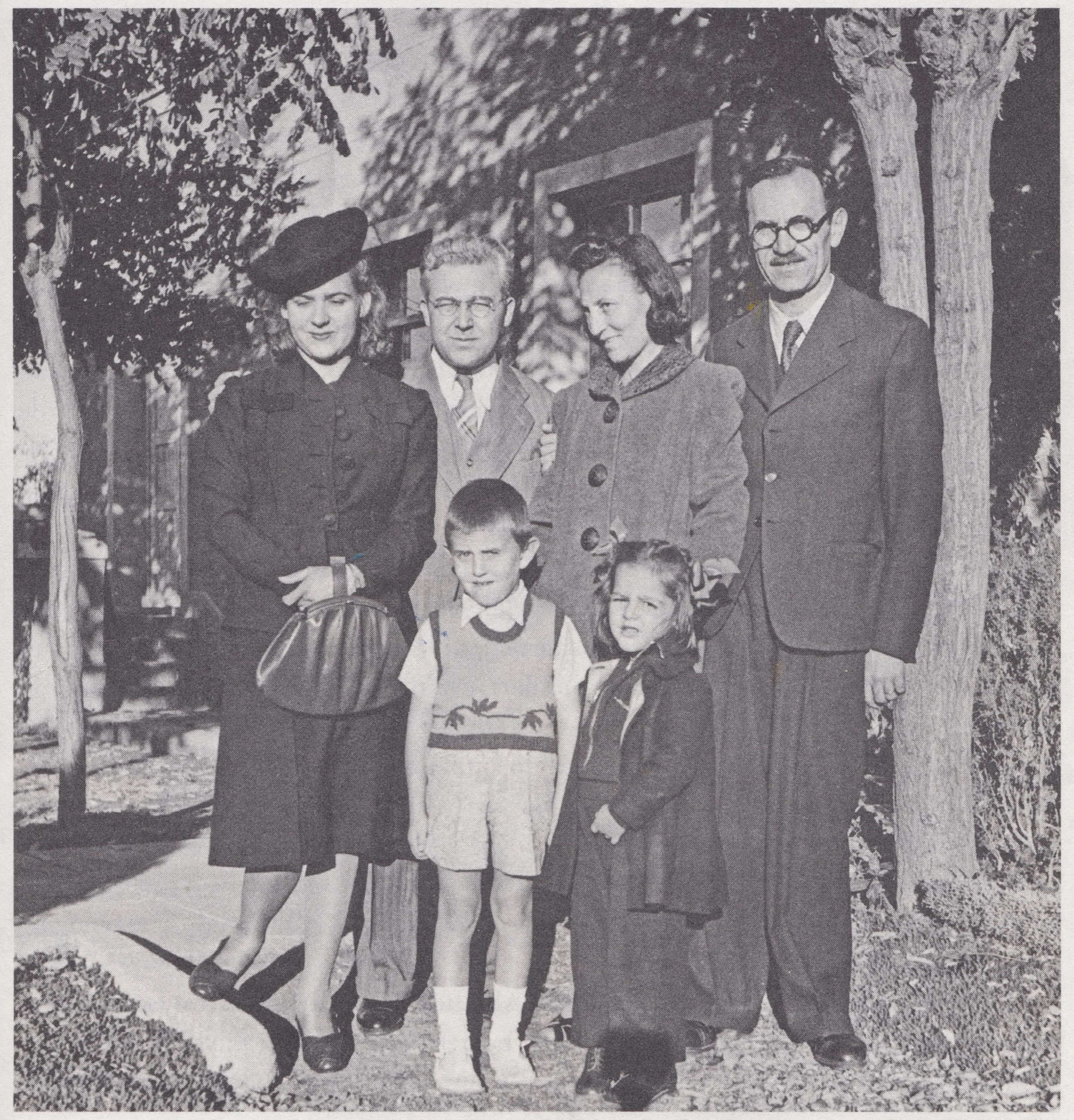
Back row (from left to right): Aliye Ali, Sabahattin Ali, Hayrünnisa Boratav, Pertev Naili Boratav. Front row: Korkut Boratav, Filiz Ali. Source: A’dan Z’ye Sabahattin Ali, Sevengül Sönmez, YKY, İstanbul, 2009,
Writer Sabahattin Ali and folklorist Pertev Naili Boratav were both born in1907, forty-three kilometres away from each other. Sabahattin Ali opened his eyes to the world on the 25th of February 1907 in Eğridere (Ardino) and Pertev Naili Boratav (born Mustafa Pertev) was born on the 2nd of September in Darıdere (Zlatograd). The two met at the Higher Teacher Training School in Istanbul where Sabahattin Ali spent a lot of his time, despite not being enrolled as a student there. They quickly became friends, “brothers” even. Here’s how Sabahattin Ali describes his dear friend in one of his writings:
“Pertev: is a student at the Higher Teacher Training School and the Faculty of Literature. He’s the male version of Mehpare [another friend he considered his “sister”]… it’s unexpected to come across such a kind-hearted, sweet boy… he’s a man who has given importance to unimportant and worthless Sabahattin, Sabahattin who’s considered as a child. He remains hopeful and keeps repeating that he’s expecting a lot from him, that he will become many things in the future.” [1]
When, in 1928, Sabahattin set off to Germany after having earned a scholarship, Pertev was one of the few friends that came to see him off at the Sirkeci train station.[2] Throughout Sabahattin Ali’s time in Germany, they continually sent letters to each other. In fact, Sabahattin Ali moved around so often that he would give people Pertev Boratav’s address to receive letters. When he came back from Germany in 1930, Sabahattin Ali was appointed as a high school teacher in Aydın. A year later, he was accused of spreading communist propaganda and imprisoned for three months. After his release, he went on teaching in Konya where he would often complain about boredom to his friend. Therefore, Boratav extended an invitation to him in a letter:
“We will stop in Konya for a day. Let’s see what you will have to offer us. Let me tell you, considering it’s the start of the month and the holidays, I won’t be easy to please as a guest.” [3]
Boratav used the observation trip he took to Adana, Mersin and Tarsus with other students from Istanbul University as an opportunity to stop by Konya and see Sabahattin Ali. After his friend’s visit, Sabahattin Ali decided to tag along and embark on the observation trip as well. A few months later, The young teacher was incarcerated for a second time. This time, he was accused of reciting a poem that criticised the head of government, Mustafa Kemal Atatürk.[4] In total, he spent ten months in prison: first in Konya, then in Sinop. Once again, Boratav stood by his friend. He was in the audience as Sabahattin Ali was defending himself during the trial.
“Sabahattin performed rather nice numbers, so much so that even he got excited in the process. […] He was sentenced to a year, but at least he got a few hundred people to listen to his poetry.”[5]
While his friend was in prison, Boratav made himself useful any way he could. He ran errands for Sabahattin Ali and looked after his friend’s mother and sister. Some of these errands were more pressing than others.
“The green ink in my pen is about to run out. I told Pertev to go and get some more, he couldn’t find it anywhere and bought some purple ink instead. Hence I won’t be able to write in this colour that I love for a long while it seems…” [6]
They both spent time at the Faculty of Linguistics and History-Geography (DTCF) at Ankara University. In 1936, Sabahattin Ali was attending Fuad Köprülü’s lectures, as Pertev Boratav was working as the same professor's assistant. In 1941, Boratav obtained doctoral status with his thesis on Folk Tales and Folk Storytelling. The same year, alongside sociology professors Behice Boran and Niyazi Berkes, he started publishing a magazine titled Yurt ve Dünya ( The Nation and the World). The magazine published sociological analyses as well as short stories and poems. Sabahattin Ali contributed to the magazine from time to time with short stories or opinion pieces. However, in 1944 Yurt ve Dünya was banned by the authorities on the allegations that it spread communist ideas. This marked the beginning of the smear campaign directed by the government against these professors.

As such, in 1948, the mounting pressure against Sabahattin Ali, Pertev Boratav and their entourage forced both men to reconsider their future in Turkey. In 1947, the three professors of the Faculty of Linguistics and History-Geography, Pertev Naili Boratav, Niyazi Berkes and Behice Boran were accused of promoting communism and undermining nationalism. Though eventually acquitted in his 1948 trial, the folk literature department Boratav presided over was shut down by the government. Unable to pursue his academic career, he decided to leave for France where he worked at the CNRS (National Center for Scientific Research) for long years.
As for Sabahattin Ali, he spent a large chunk of his short life in courts. As the number of trials against him kept growing, he decided to back away from writing and politics. He acquired a truck and started working as a hauler. As he was keen on traveling and meeting people, he thought it would be a good way to feed his writing through new discoveries and encounters throughout the country. As governmental pressure kept growing around him, Sabahattin Ali grew concerned about going back to prison and suffering the same fate as his friend, the poet Nâzım Hikmet. He thus decided to flee Turkey. Through a prison acquaintance he was introduced to Ali Ertekin, a smuggler who agreed to help him cross the Bulgarian border as his passport had been revoked. Sabahattin Ali planned on settling in Germany or France and have his wife Aliye and daughter Filiz join him there. But he never made it across the border. Three months after he left home, his body was found in Kırklareli near the Turkish-Bulgarian border. Ertekin admitted to the murder of Sabahattin Ali. He defended himself by saying that he acted on nationalistic sentiments as the writer’s words made him feel hateful. However, although a culprit was “found”, the circumstances of Sabahattin Ali’s death remain unresolved. The involvement of the police force in the affair is still suspected.
Pertev Naili Boratav has kept all of the documents in his possession concerning Sabahattin Ali. These documents are in box number sixty-four at the History Foundation’s Pertev Naili Boratav archive.
Pertev Boratav and Sabahattin Ali were close friends throughout their lives. They studied together, worked together and undertook their military service together. Even though Sabahattin Ali initially complained that his friend “forgot about [him]” when he got married, they would often spend time together with their spouses and children. On the weekends, they would go for walks in the Atatürk Forest Farm of Ankara. Parts of this forest, which was Ankara’s largest green space and a protected natural site, have been illegally destroyed in 2012 in order to build the presidential palace which consists of over a thousand rooms and cost hundreds of millions to build.
This is exactly what Sabahattin Ali was warning his readers against in his 1945 tale The Glass Pavillion:
“Never build a glass pavilion above your own heads. However if a day comes that such a pavilion is built, never think of it as something that cannot be shattered or toppled over. It only takes a few heads to turn the most monumental glass pavilion into dust.”
Footnotes
[1] A’dan Z’ye Sabahattin Ali, Sevengül Sönmez, YKY, İstanbul, 2009, p. 99
“Pertev: Yüksek Muallim Mektebinde ve Edebiyat Fakültesindedir. Mehpare’nin erkek bir numunesidir… Dünyada bu kadar iyi kalpli, sevimli bir çocuk bulunması melhuz değildir… Ehemmiyetsiz ve kıymetsiz Sabahaddin’e, çocuk addedilen Sabahaddin’e ehemmiyet veren ve ondan birçok şey bekleyen, onun ilerde birçok şeyler olacağını ümid ve tekrar eden bir adamdır.
[2] A’dan Z’ye Sabahattin Ali, Sevengül Sönmez, YKY, İstanbul, 2009, p. 36
[3] A’dan Z’ye Sabahattin Ali, Sevengül Sönmez, YKY, İstanbul, 2009, p. 19
[4]
News from the Homeland
Hey, those who didn’t part from the homeland,
Tell me, have the muddy streams cleared up?
Has blood stopped flowing from the gutter?
Have the great goals been achieved?
Do they still hang those who worship God?
Do they make every clown a deputy?
Do peasants have a plow in their hand?
Have their skinny oxen come back to life?
If he says I am God, they all will acquiesce
Do they still worship that mighty bastard?
Has Ismet not been jailed yet?
Do you think Ali the Bald was beheaded?
[5] A’dan Z’ye Sabahattin Ali, Sevengül Sönmez, YKY, İstanbul, 2009, p. 64
[6] A’dan Z’ye Sabahattin Ali, Sevengül Sönmez, YKY, İstanbul, 2009, p. 362
ABOUT ISTASYON
ISTASYON is a small publishing house which prints translations from Turkey.
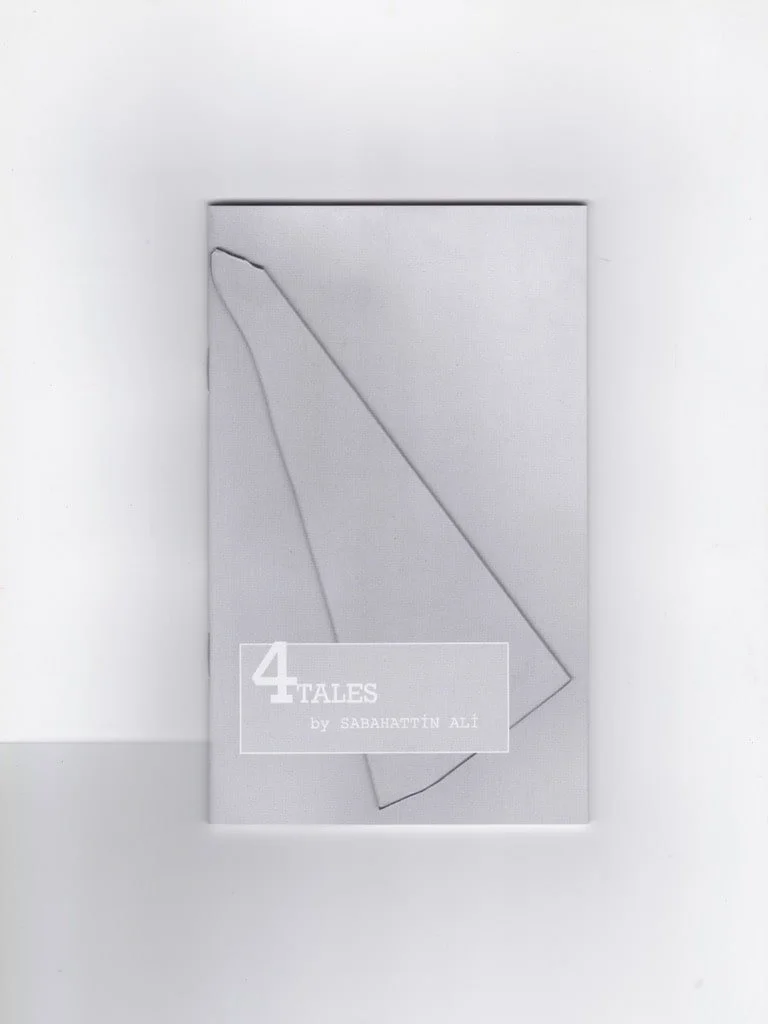
I’d been dreaming of starting such a project for a while, thinking “I will do it some day”, until I came across a small George Orwell pamphlet (Politics and the English Language) consisting of about twenty pages stapled together. I realised that publishing, or making a book, didn’t necessarily have to be such a daunting endeavour. I decided to start with a very small format, taking it one step at time, and finally published the translation of Sabahattin Ali’s tales (4 Tales) and poems he wrote from prison (5 Hapishane Şarkısı/ Prison Songs). You can find out more on istasyon.website.
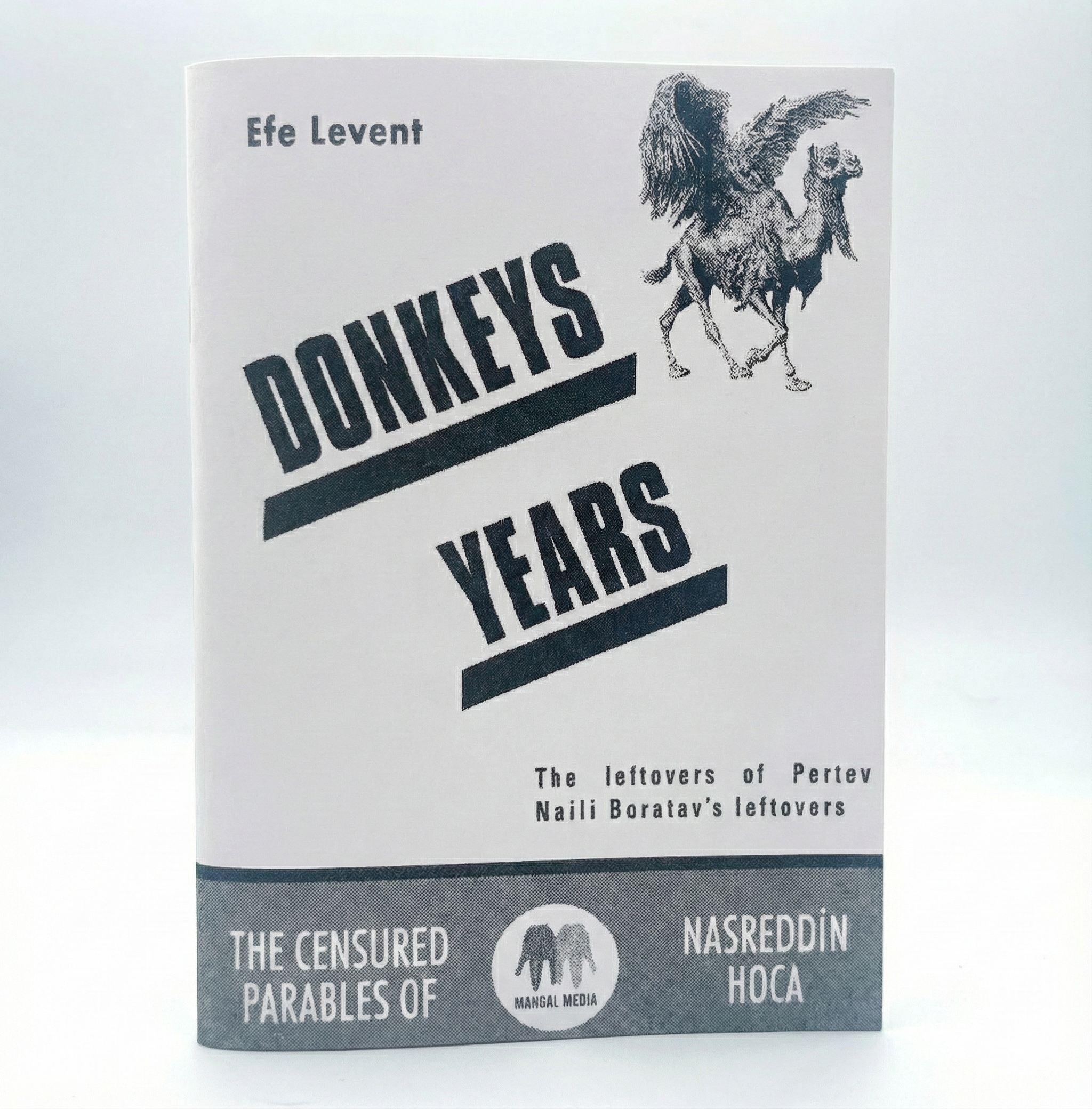
This article is written in celebration of the friendship between Boratav and Ali. But it is also a celebration of the friendship between Istasyon Editions and Mangal Media. Two micropresses dedicated to translating voices and intellectual histories in Asia Minor. You can read a selection from Boratav’s outrageous collection of Nasreddin Hoca folk stories translated to English for the first time by Efe Levent. Get a PDF or hard copy now, from the Mangal Media online store!
Support Mangal Media on Patreon
〰️
Support Mangal Media on Patreon 〰️
Mangal Media is supported entirely by readers like you! If you enjoyed this content and would like to see more of it, please visit our Patreon page to browse our pledge options and rewards.